
Google Veo 3.1 Now Creates Vertical Videos From Images With Improved Consistency
Google Veo 3.1 now creates vertical videos from images with improved consistency, bringing Shorts‑ready vertical formats, stronger visual control, and cleaner 4K upscaling to AI video creation.
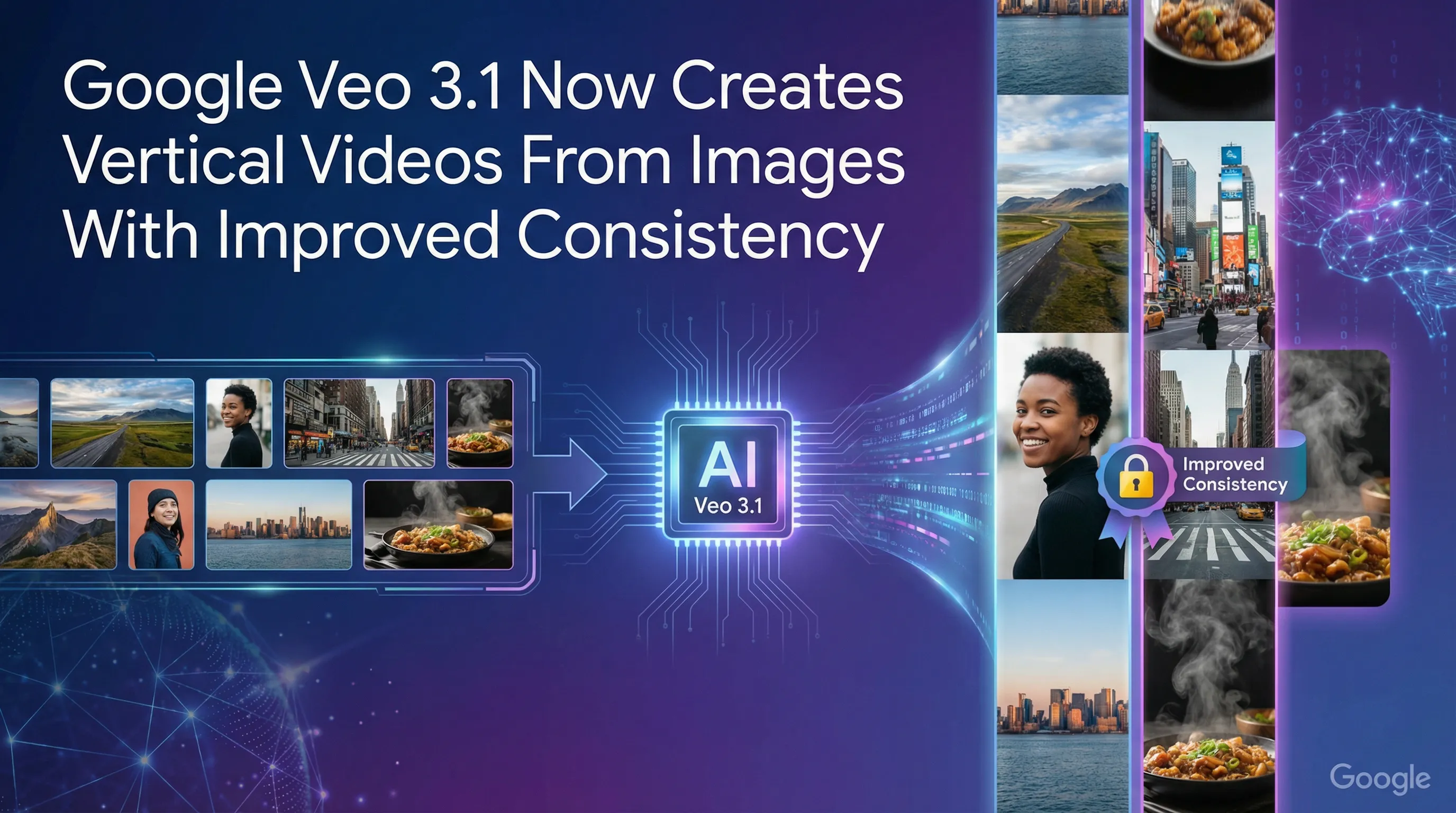
Google Veo 3.1 now creates vertical videos from images with improved consistency, and this update quietly changes how practical AI video creation can be. Instead of chasing dramatic new capabilities, Google is focusing on something creators value more: control. The result is a video model that behaves with more discipline and produces outcomes that better match what users actually intend.
This shift may not look flashy at first glance, but it directly addresses many of the frustrations that surrounded earlier AI‑generated video tools.
A Clear Move Toward Visual Discipline
With Veo 3.1, Google is tightening the relationship between input and output. The model is now required to pay closer attention to the reference images used to generate a video. This means fewer surprises and a smaller gap between what creators provide and what the system produces.
That change alone explains why Google Veo 3.1 now creates vertical videos from images with improved consistency. It is no longer just generating motion—it is respecting structure, design, and continuity.
Ingredients to Video Gets Smarter
The updated Ingredients to Video feature allows creators to build short videos from up to three reference images. Veo 3.1 analyzes these images to identify core elements such as characters, environments, surfaces, and visual patterns.
Google says the revised system delivers videos that feel more lively and imaginative, with clearer storytelling and stronger dialogue. More importantly, Google Veo 3.1 now creates vertical videos from images with improved consistency, so characters and environments remain recognizable throughout the clip instead of slowly drifting into something unfamiliar.
Solving the Problem of Visual Drift
One of the most common complaints about AI video generation has been visual drift. A character might subtly change their face, clothing, or proportions from one scene to the next. Objects could lose their shape, and backgrounds might become abstract.
Veo 3.1 directly addresses this issue. The model is now expected to maintain consistent appearances across different scenes and lighting conditions. Objects, textures, and backgrounds can be reused without degrading over time. This improvement reinforces why Google Veo 3.1 now creates vertical videos from images with improved consistency and why that consistency matters for real creative work.
4K Upscaling and Cleaner Visual Output
Veo 3.1 also extends its technical limits by allowing videos to be upscaled to 4K, up from the previous 1080p ceiling. While this is not native 4K generation—something Google hinted at in 2024 but has not yet delivered—it is still a useful improvement.
Google also notes that standard 1080p output has been refined, producing cleaner and more precise images. Combined with stronger consistency, this makes the final videos feel more polished and less experimental.
Final Thoughts
The latest Veo update suggests that Google has learned an important lesson: bold claims mean little if the results feel chaotic. Google Veo 3.1 now creates vertical videos from images with improved consistency, cleaner visuals, and workflows designed for how people actually watch video today.
Try Google Veo 3.1 for free.