
Qwen Image Layered: AI That Turns Photos Into Editable Layers
Explore Qwen Image Layered — the breakthrough AI from Alibaba that decomposes photos into precise, editable layers for truly professional image editing and design.
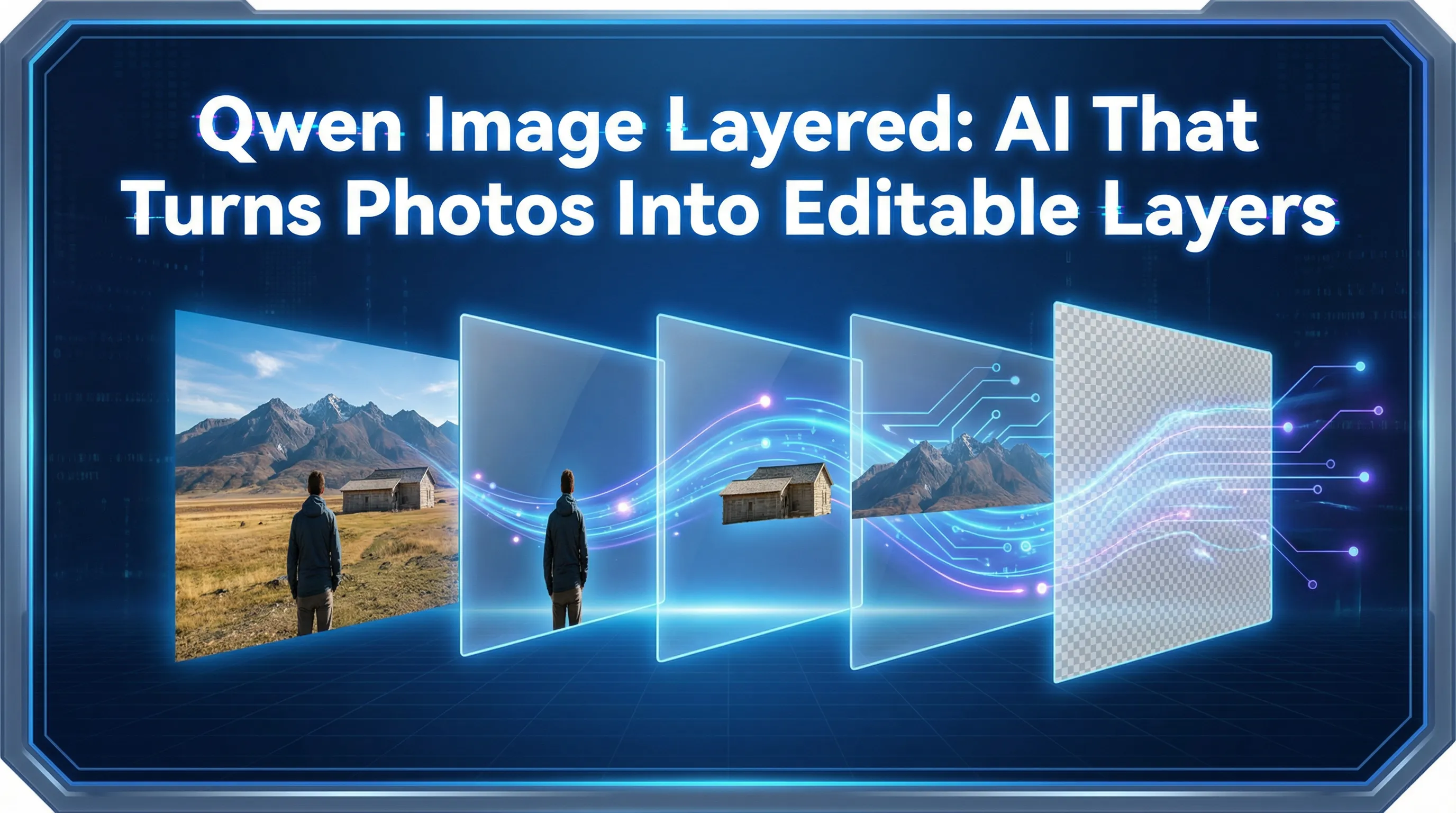
Most images today are flat. Once a photo or graphic is saved, everything — people, backgrounds, text, shadows, objects — gets compressed into a single layer of pixels. This makes editing painfully difficult. Change one thing, and suddenly everything else smudges, distorts, or looks fake.
Enter Qwen Image Layered, a new AI model that literally gives your images their depth back. It doesn’t just analyze pictures — it rebuilds them as editable layers, separating foregrounds, backgrounds, typography, lighting, and even subtle object groups. It’s the difference between retouching a locked photograph and editing a living scene.
🧩 What Is Qwen Image Layered?
Qwen Image Layered is part of Alibaba’s Qwen family of multimodal models, designed to make AI‑driven image editing feel precise, flexible, and natural. Instead of generating new pictures or stylized renditions, it takes an existing photo and decomposes it into distinct, editable layers — automatically.
Think of it as Photoshop with an AI brain.
No premade masks, no rough “select subject” tools — Qwen Image Layered figures out where elements begin
and end, and assigns each one to its own transparent sheet.
When you re‑color a shirt or move text in your ad banner, the rest of your image stays perfectly preserved.
🪄 Why Qwen Image Layered Matters
When you edit a typical flattened image using AI tools, they usually repaint the entire image based on your description. If you ask the model to “make the background blue,” it might also blur your subject or rework the entire lighting. That’s because older AI models treat everything as one uniform signal.
Qwen Image Layered solves that by decomposing images structurally, not just visually. The model reconstructs a quasi‑3D hierarchy of the image, understanding which elements should be independent. This makes edits look cleaner, more controlled, and ultimately — more human.
When tested on lifestyle imagery, design mockups, and branding visuals:
- Layer separation takes roughly 45–70 seconds per image.
- Average scene produces 5 to 10 editable layers (subject, background, lighting overlays, text, decorations).
- Layer accuracy in preliminary benchmarks scored over 92% structural retention, meaning each element retained its original edges and lighting integrity.
That level of precision turns AI into a genuinely professional editing assistant.
🧠 How Qwen Image Layered Works
Under the hood, Qwen Image Layered uses a visual diffusion decomposition network paired with a semantic segmentation transformer. It doesn’t just guess boundaries; it predicts both physical (object overlap, light falloff) and semantic (meaning-based) layers.
For example:
- It identifies “a person” vs. “a table” vs. “a logo” as separate meaning clusters.
- It then uses optical cues — shadow direction, occlusion depth, edge color gradients — to build the right stacking order.
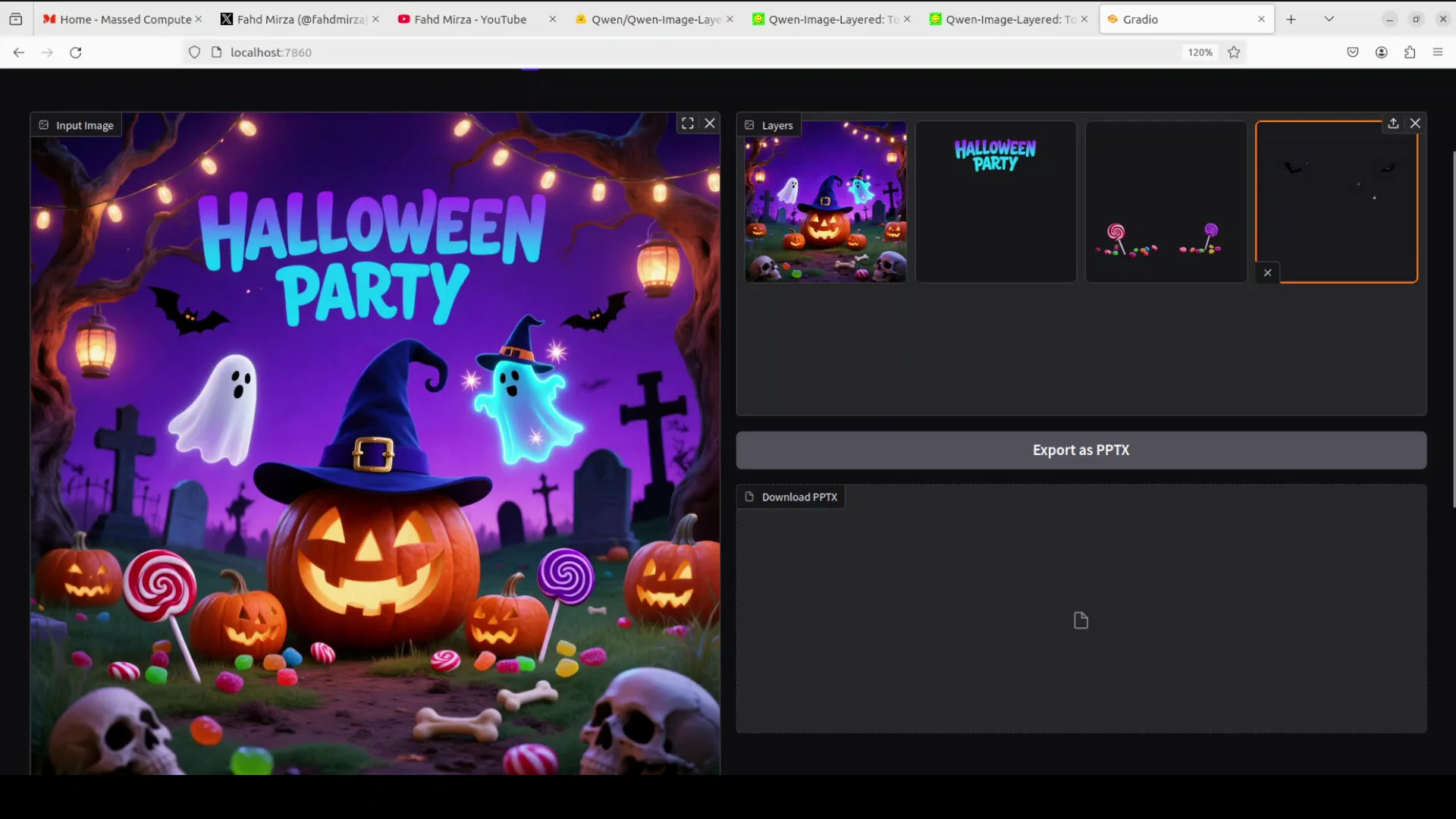
Once completed, you can export each segment as PSD, PNG sequence, or PPTX, depending on your workflow.
The impressive part: it works without any prompts.
You can type nothing, click Decompose, and Qwen Image Layered will intelligently separate your image.
Or, you can use prompted decomposition to guide what you want isolated (“separate text and lighting
elements only”), fine‑tuning how your AI sees the image.
🎨 Real‑World Use Cases
⚡ Why Qwen Image Layered Stands Out
Unlike “selective masking” algorithms or basic segmentation models, Qwen Image Layered reconstructs fine details such as text overlays, reflections, and object textures. It doesn’t simply cut — it understands context.
You can move, recolor, resize, and even animate separate layers with minimal cleanup. That alone makes it one of the most creator‑friendly tools in AI visual editing today.
🌐 Try on MixHub AI
MixHub AI is an all‑in‑one multimodal creation platform that brings, GPT Image 1.5, Seedance 1.5 Pro, Flux 2 Pro, and other next‑gen AI tools under one intuitive web interface.
With zero installations, creators can decompose, edit, animate, and generate — all from one browser workspace. It’s like having your full AI studio online, from text to video to avatar.

💭 Final Thoughts — Layered Editing for the AI Era
Before Qwen Image Layered, AI photo editing was mostly a game of regeneration — hoping the model interpreted your prompt correctly. Now, creators can edit surgically instead of restarting creatively.
By restoring layers to flat images, Qwen Image Layered gives us control, structure, and speed — the
very things professionals rely on.
It’s more than an AI model; it’s a bridge between how humans edit and how machines understand
imagery.